Advanced upper-jaw implant option
Zygomatic Dental Implants in Las Vegas
Zygomatic implants are longer implants anchored in the cheekbone for selected people with severe upper-jaw bone loss—when conventional implant placement may not have adequate support.
A quiz cannot diagnose candidacy. Zygomatic treatment requires a clinical examination, appropriate imaging and a restoration-led plan.
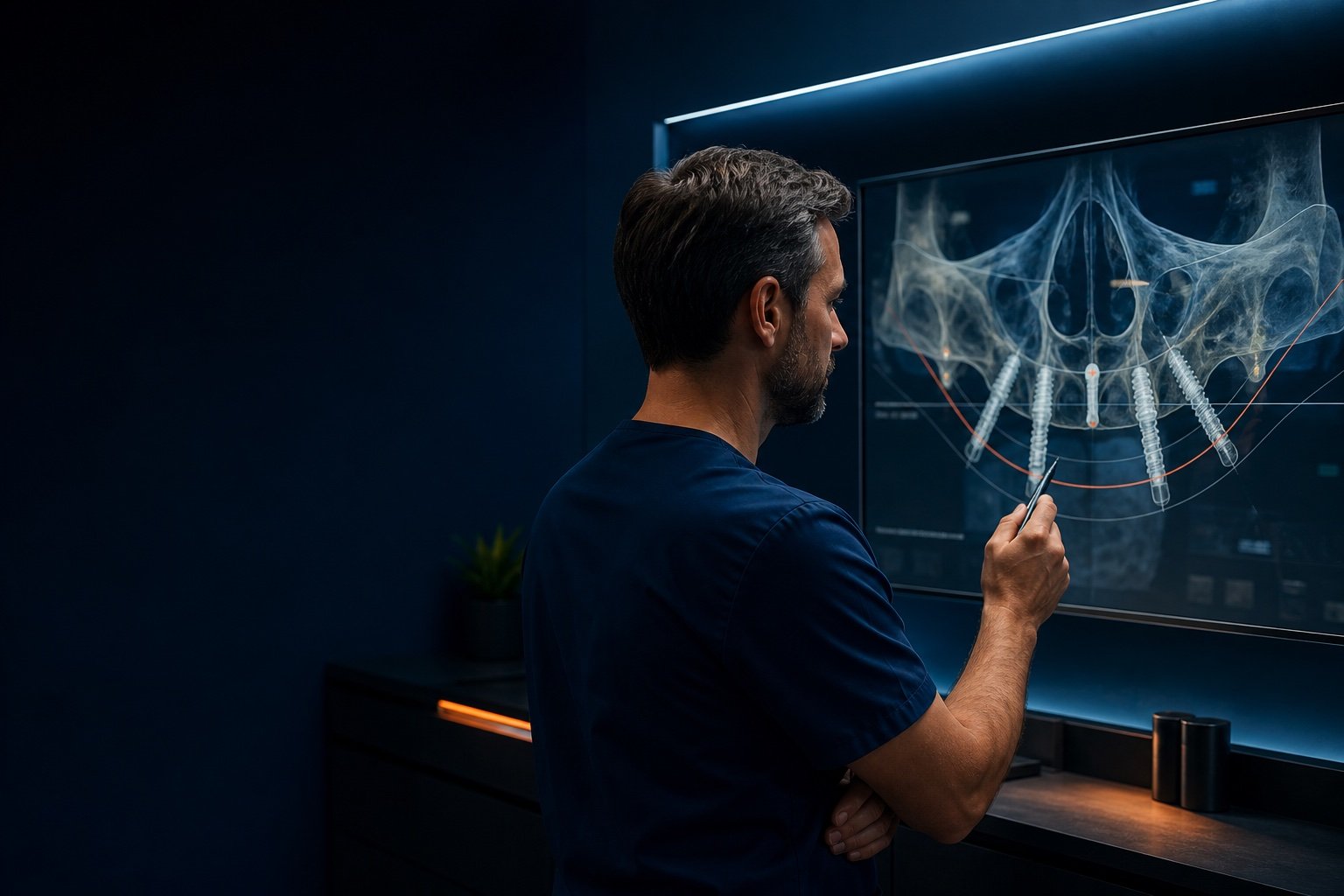
The essential distinction
What makes zygomatic implants different?
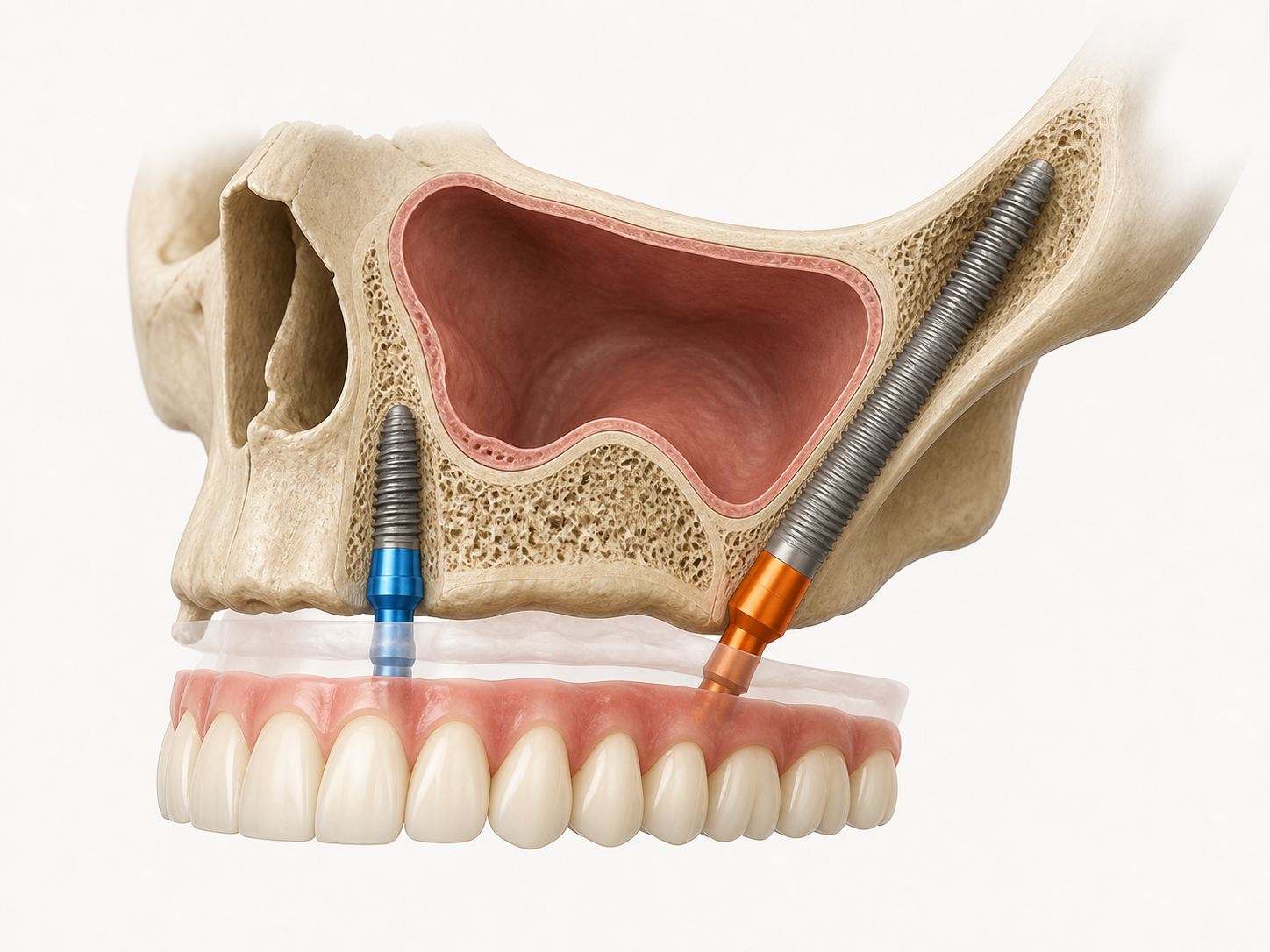
Conventional implants usually depend on available upper-jaw bone. Zygomatic implants extend to the zygoma—the cheekbone—to create an alternative support pathway in selected severe upper-jaw cases.
Why anchorage matters
A different route to full-arch support
The implant is only one part of the system. Its position must serve a functional, cleanable and maintainable restoration.
Severe maxillary bone loss changes the usual plan.
When the upper jaw has insufficient bone in conventional implant sites, the choices may include grafting, an advanced anchorage pathway, a modified prosthetic plan or a non-implant alternative.
The cheekbone can offer an alternative anchorage site.
Zygomatic implants traverse the upper-jaw region and engage the zygoma. The American College of Prosthodontists describes this as a graftless option for selected severely atrophic maxillae, while also emphasizing that the surgery is substantially more complex.
The planned teeth determine whether the support is useful.
Implant position, prosthetic emergence, speech space, hygiene access and bite must be coordinated. An implant that integrates but cannot support a maintainable restoration is not a complete solution.
Evaluation—not automatic eligibility
Who may be considered?
People are considered from the complete medical, anatomical and restorative picture. Bone loss alone does not establish candidacy.
Severe upper-jaw atrophy
Conventional implant positions may not offer adequate bone support for the intended restoration.
Prior graft or implant difficulty
A previous pathway may have failed, become impractical or require an independent second opinion before retreatment.
Full-arch upper-jaw rehabilitation
The treatment goal involves a complete upper arch, and advanced support may be evaluated within a larger prosthetic design.
Anatomy requiring another strategy
Sinus position, bone volume, defect history or restorative needs may make a conventional route unsuitable.
Medical history, smoking, active disease, sinus health, tissue condition, hygiene capacity, healing risk and long-term maintenance must also be reviewed.
Compare pathways, not buzzwords
Grafting, zygomatic and pterygoid options solve different problems
No column is the automatic winner. The correct comparison depends on the bone deficiency, planned tooth position, surgical burden, timeline and contingency plan.
Bone-grafting pathway
Adds or develops bone so conventional implant positions may become possible.
- Can support conventional implant placement
- May involve additional procedures and healing
- Restorative position still guides the plan
Zygomatic implants
Use cheekbone anchorage for selected severe upper-jaw deficiency.
- May avoid adjunct grafting in selected cases
- Can participate in fixed full-arch support
- Requires advanced planning and surgery
Pterygoid implants
Seek posterior anchorage in the pterygoid region rather than the cheekbone.
- Addresses a different anatomical support need
- May reduce a distal cantilever in selected plans
- Can be considered alone or with other implants
Zygomatic and pterygoid implants are not interchangeable labels. They use different anatomy and can play different roles within full-arch reconstruction. Read the dedicated pterygoid dental implant guide.
The decision sequence
Plan the restoration before choosing the implant path
ACP guidance recommends cross-sectional imaging for zygomatic implant planning, justified by the clinical evaluation and limited to the necessary field of view.
Define the problem
Review health, symptoms, prior treatment, oral disease, bone loss and the reason conventional care may be limited.
Map the anatomy
Use examination and appropriate imaging to assess the maxilla, sinus region, zygoma and relevant structures.
Design the teeth
Plan tooth position, bite, speech, support, hygiene access and provisional restoration before finalizing implant positions.
Compare pathways
Discuss conventional, grafted, zygomatic, pterygoid and non-implant alternatives—including what happens if the preferred plan changes.
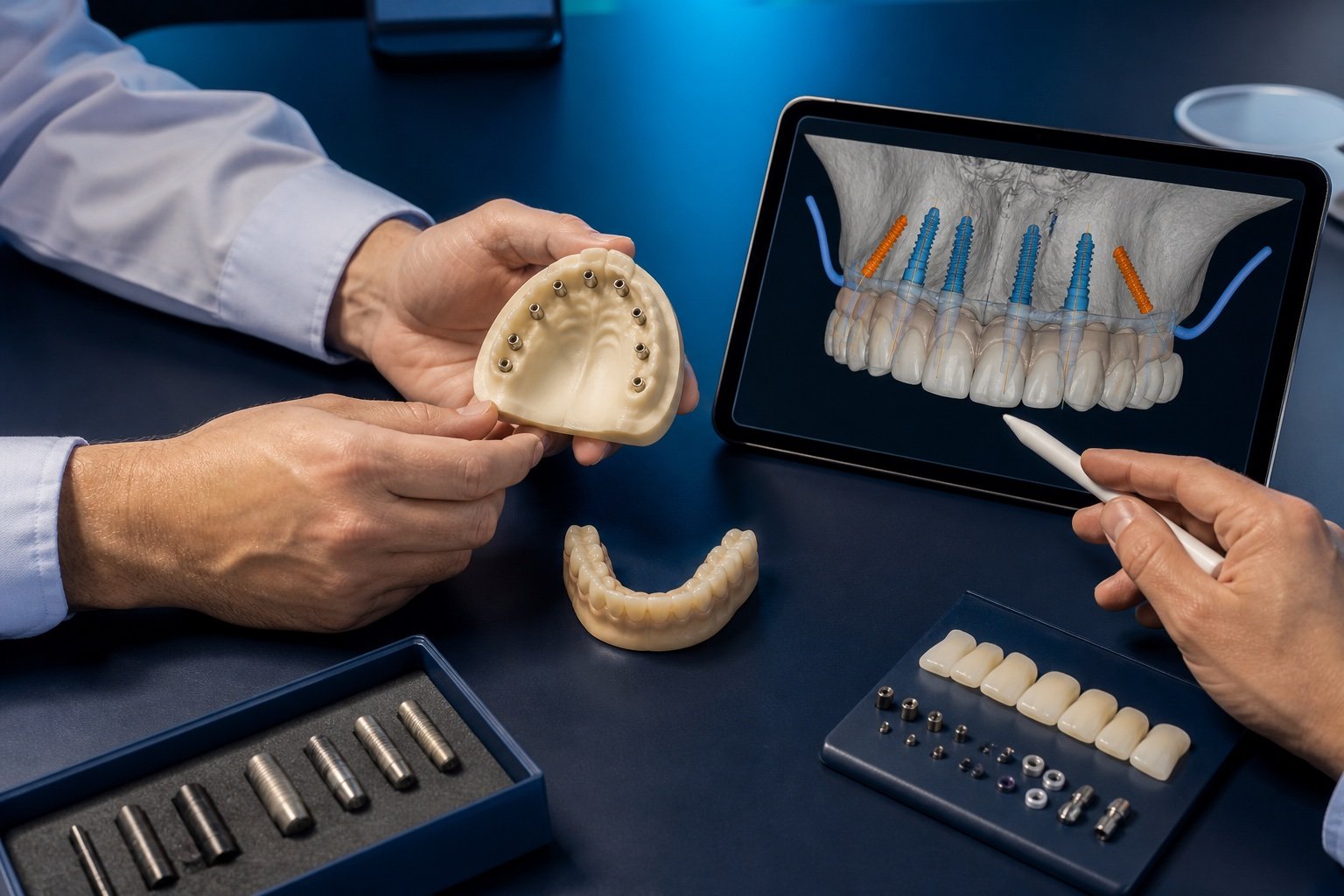
Support is not the final smile
Zygomatic describes the anchor. Full-arch describes the restoration.
Are zygomatic implants the same as All-on-4?
No. “Zygomatic” identifies an anchorage site and implant type. “All-on-4” describes a complete-arch concept supported by four implants. A complex upper-jaw plan may use conventional and zygomatic implants in different configurations, but the correct design must be individualized.
Explore how this fits within full-mouth reconstruction or review the broader complex implant case pathway.
Before treatment
Advanced does not mean appropriate for everyone.
Zygomatic surgery is more complex than conventional implant placement. The decision must account for medical fitness, sinus and maxillofacial anatomy, active infection, tissue health, anesthesia needs, prosthetic design and whether another option offers a better risk-to-benefit balance.
- Possible surgical injury to nearby anatomy
- Sinus-related complications
- Implant or prosthetic failure requiring additional care
- Speech, bite, comfort or hygiene difficulties
- A treatment plan that must change after clinical findings
After treatment
Maintenance is part of the treatment—not an optional extra.
Daily cleaning and regular professional evaluation are essential. The final restoration should provide practical access for hygiene and a service plan for components, wear, tissue changes and any symptoms.
- Follow the personalized hygiene instructions
- Attend the recommended maintenance visits
- Keep implant brand and component records
- Report pain, movement or new sinus symptoms promptly
- Understand who can remove or repair the prosthesis
Questions worth asking
Zygomatic implant FAQ
Direct answers first, with the qualifications that matter.
Can zygomatic implants avoid bone grafting?
They may provide a graftless pathway in selected severe upper-jaw cases, but they do not eliminate every grafting need or make grafting inappropriate. Anatomy, restoration design and risk determine the comparison.
Are zygomatic implants used only in the upper jaw?
Yes. They use the zygomatic, or cheekbone, region to support treatment of selected maxillary conditions.
Can fixed teeth be placed immediately?
An interim fixed restoration may be possible in selected protocols, but it depends on implant stability, prosthetic design, bite, health and the complete surgical assessment. It should not be promised before evaluation.
What imaging is used for planning?
The initial evaluation may include conventional dental imaging. ACP guidance recommends cross-sectional imaging for zygomatic implant planning when justified by clinical evaluation, using no larger a field of view than necessary.
Are zygomatic implants more complex than conventional implants?
Yes. The ACP describes zygomatic surgery as significantly more complex. Planning must account for maxillofacial anatomy, anesthesia, restorative emergence and complication management.
What should I bring for a second opinion?
Bring prior scans, treatment proposals, implant records, surgical notes, medical history and a timeline of complications or repairs. A new clinical examination or imaging may still be needed.
U.S. FDA: Dental Implants—What You Should Know · American College of Prosthodontists: Zygomatic Implants · American College of Prosthodontists: Diagnostic Imaging in Implant Dentistry
Educational content only. It does not diagnose candidacy or replace evaluation by a qualified dental professional.
A clearer next step
Find out which upper-jaw pathway deserves a closer look.
Start with the 60-second quiz or call to request an evaluation. Expect a comparison of options—not an automatic recommendation for the most complex treatment.
[VERIFY before launch: clinician credentials, consultation terms, location, hours, anesthesia arrangements and privacy workflow.]